




Fast Flexible and Affordable
Discover Our Playground Equipment Solutions Today!

 Jun 09,2026
A newly installed wooden combination slide draws families to a city park. The natural wood finish, the sturdy tower, the gentle curve of the slide—everything looks perfect. Two years later, the same slide shows signs of wear: a slightly wobbly handrail, surface cracks on the platform, rust spots on exposed bolts. A visitor‘s parent reports a splinter to park management. The slide isn’t unsafe yet, but the maintenance backlog is growing.
An Outdoor Slide made of wood is not a “set it and forget it” investment. Wood expands and contracts with humidity, fasteners loosen with daily use, and UV exposure degrades finishes over time. The difference between a slide that lasts a decade and one that becomes a maintenance headache is a consistent inspection and care routine. This guide outlines daily, weekly, monthly, and seasonal maintenance tasks specific to wooden combination slides, explains how safety certifications actually protect your operation, and gives you field‑proven practices that extend equipment life. Baiqi‘s wooden combination slide is designed for durability and visual appeal, but even the best construction needs systematic care.
The way a wooden outdoor slide behaves in its first months reveals which components will need extra attention.
Wood seasoning and movement. Freshly treated wood contains residual moisture. As it dries and acclimates to outdoor conditions, it may develop small surface cracks (checking). Most checking is cosmetic and does not affect structural integrity, but any crack wider than 5mm or that extends through the full thickness of a load‑bearing board requires evaluation.
Fastener seating. Bolts and screws holding platforms, handrails, and slide sections settle into the wood under load. In the first 30–60 days, certain high‑stress joints may loosen as wood fibers compress. A simple tug test on handrails and platform edges identifies problem areas. Tighten loose fasteners to manufacturer specification, then mark the torque value for future reference.
Slide surface wear. The slide itself—typically made of LLDPE or metal—shows the first signs of wear at the entry and exit points. Scratches and surface dullness are cosmetic, but any crack, sharp edge, or deformation requires immediate repair or slide replacement.
The most important maintenance task is the one that happens every day before children arrive. A focused visual inspection takes five minutes but prevents 90% of injury-related incidents.
Remove debris and foreign objects. Clear fallen leaves, twigs, dirt, and any trash from platforms, steps, and the slide landing area. Debris can hide splinters or loose hardware. For wooden surfaces, also check for animal droppings or nesting material, which can accelerate wood decay.
Inspect the slide surface and entry/exit. Run a hand over the slide surface. Feel for rough patches, sharp edges, or cracks. Check the entry platform for stability and the exit area for proper clearance. For slides over 48 inches high, the exit region should be between 7 and 15 inches from the protective surface.
Check for obvious fastener issues. Look for bolts that have backed out, washers that are no longer seated, or screw heads that have become exposed above the wood surface. Mark any protruding fastener for same‑day repair.
Verify landing surface condition. The impact-absorbing surface under and around the slide—whether wood chips, rubber mulch, or poured rubber—must be at the proper depth. Rake loose-fill material back into place and ensure no hard surfaces are exposed.
Beyond daily visual checks, schedule more thorough inspections on a weekly and monthly basis.
Weekly: fastener torque and moving parts. Use a torque wrench to check bolts at major structural connections—where the tower meets the base, where the slide attaches to the structure, and at handrail bases. For a typical wooden outdoor slide, torque specifications range from 15–25 Nm depending on bolt size and wood species. Also check that gates, latches, and any moving elements operate smoothly without binding.
Weekly: netting and climbing elements. Wooden combination slides often include climbing nets or ropes. Inspect for fraying, broken strands, or loose attachment points. Replace any netting showing more than three broken strands within a 10‑cm section.
Monthly: wood surface and finish. Walk the entire structure, looking for splinters, raised grain, or soft spots that indicate rot. Tap suspicious areas with a screwdriver handle; a dull thud suggests internal decay. Reapply wood sealant or stain annually, but spot-treat any bare wood immediately to prevent moisture ingress.
Monthly: hardware corrosion. Stainless steel or galvanized hardware resists rust, but washers and nuts in high‑moisture zones may still show corrosion. Replace any fastener with red rust or pitting. In coastal environments, consider upgrading to marine-grade stainless steel.
Seasonal changes stress outdoor wooden structures. A proactive seasonal schedule extends equipment life significantly.
Spring (after winter thaw). Inspect for frost heave: check that all posts and supports remain firmly anchored. Look for shifting or tilting. Tighten all fasteners, as freeze‑thaw cycles can loosen them. Clean winter residue (sand, salt, debris) from the slide surface and platforms.
Summer (before peak use). Check wood for sun damage and drying cracks. Apply a UV‑protective wood sealant if needed. Inspect slide surface for heat absorption; dark-colored slides can become uncomfortably hot in direct sun. Consider adding shade structures or switching to lighter slide colors for high‑sun installations.
Autumn (after leaf fall). Remove leaves and debris from platforms and underneath the structure. Fallen leaves retain moisture against wood, accelerating rot. Check that drainage around the base is adequate—standing water under the slide promotes wood decay.
Winter (before freeze). For regions with snow and ice, remove standing water from surfaces. Apply a non‑corrosive anti‑ice agent to wood surfaces only if necessary. Do not use salt-based deicers, which damage wood and accelerate hardware corrosion.
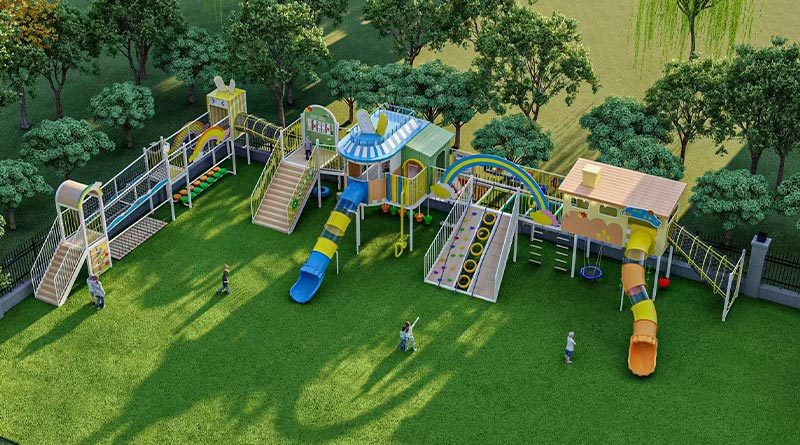
A certified wooden outdoor slide is not just a marketing claim—it‘s documented evidence that the equipment meets rigorous safety requirements.
ASTM F1487 (U.S.). The standard for public playground equipment covers entrapment hazards, use zones, impact attenuation, and structural integrity. For slides, it specifies maximum slopes, side height requirements, and exit region dimensions.
EN1176 (Europe). The European standard covers general safety requirements for permanently installed public playground equipment. EN1176-7 specifically addresses inspection and maintenance of playground equipment. A compliant wooden outdoor slide will carry EN1176 certification and be designed with non‑slip surfaces, guardrails, and proper transition angles.
CE and TUV SÜD certification. These mark conformity with EU safety, health, and environmental protection standards. For commercial applications, CE and TUV SÜD certifications provide third‑party validation that the equipment meets international safety protocols.
Baiqi‘s wooden combination slide is engineered to meet applicable safety standards, with features such as non-slip surfaces, proper transition angles, and soft landing zones integrated into the design.
The durability of a wooden outdoor slide depends heavily on the materials used in its construction.
Wood species and treatment. Pressure‑treated pine is common for budget installations, but it requires regular sealing and may warp over time. Cedar and redwood are naturally rot‑resistant but softer and more prone to surface damage. For high‑traffic commercial settings, specify hardwood (oak, ipe) or tropical hardwood species with high natural oil content. All wood should be treated with child‑safe preservatives and sealants.
Slide surface material. LLDPE (Linear Low‑Density Polyethylene) is the industry standard for commercial slides. It is UV‑resistant, impact‑absorbing, and maintains a smooth surface for years. Galvanized steel slides are durable but can become hot in direct sun; they are better suited for shaded installations or cooler climates.
Hardware. Galvanized or stainless steel fasteners are essential. Zinc‑plated hardware will rust within two years in outdoor conditions. For coastal or high‑humidity environments, specify 316 stainless steel for maximum corrosion resistance.
Baiqi‘s wooden combination slide uses weather-resistant wood, reinforced metal components, and durable slide materials designed to withstand heavy commercial use.
Q: How much weight can a wooden outdoor slide safely support? A: Commercial-grade wooden combination slides are engineered to support over 500kg of distributed load, accommodating multiple children simultaneously. For reference, a single slide lane is typically designed for one child at a time, but the structure itself handles much higher cumulative weight. Baiqi‘s wooden combination slide has a certified maximum capacity exceeding 500kg, making it suitable for high-traffic public parks and commercial settings.
Q: How often should we replace the impact-absorbing surfacing under the slide? A: Loose-fill materials (wood chips, rubber mulch) should be topped up annually and fully replaced every 3‑5 years, depending on usage. Unitary surfaces (poured rubber, rubber tiles) should be inspected monthly for tears or lifting and typically last 8‑10 years. The exit area of the slide requires the most frequent attention, as children land there repeatedly.
Q: What are the most common failure points on a wooden combination slide? A: Wood-to‑wood joints where seasonal movement loosens fasteners; the slide entry point where children repeatedly sit and push off; and the base of support posts where ground moisture accelerates rot. Inspect these areas monthly. A wooden slide is bolted, and checking bolt tightness monthly is critical in high‑traffic environments.
Q: How do I know if my outdoor slide is still EN1176 compliant after years of use? A: EN1176-7 requires ongoing operational inspections. An annual inspection by a certified playground safety inspector is the best way to maintain compliance. The inspector will check entrapment hazards, structural integrity, impact attenuation, and fastener torque. Document all inspections for liability records.
Q: Can I refinish the wood surface myself, or should I hire a professional? A: Minor spot touch‑ups can be done by trained staff: clean the area, sand smooth, and apply child‑safe wood sealant. Full refinishing—sanding the entire structure and applying multiple coats of sealant—is best handled by a professional playground maintenance contractor, especially for tall or complex wooden combination slides.
When a playground operator invests in a wooden outdoor slide, the equipment must balance natural aesthetics with long‑term safety and durability. Baiqi manufactures wooden combination slides designed for commercial environments, from public parks and schools to daycare centers and resorts.
The wooden combination slide features a high‑capacity design certified to meet international safety standards, with load capacity exceeding 500kg. The structure combines weather‑resistant treated wood with reinforced metal frameworks, ensuring stability in outdoor conditions. Key safety features include non‑slip surfaces on platforms and steps, guardrails at proper heights, and smooth transition zones at slide entry and exit points.
Baiqi offers extensive customization options: modular configurations (slides, towers, climbing elements), adjustable slide heights and angles, and multiple color finishes to match natural or urban environments. The company provides professional installation services, technical support, and detailed maintenance documentation. For operators managing high‑traffic outdoor play areas, the combination of robust material selection and a structured maintenance schedule protects the investment and ensures that the wooden combination slide remains as safe and inviting in its tenth year as it was on opening day.
→ Request a quote from Baiqi for the Wooden Combination Slide — Share your available space dimensions, target age range (recommended 3–12 years), preferred slide type (straight, curved, or tunnel), and any specific theme requirements. Their design team will provide 2D layout plans and 3D concept renderings with safety certifications included.


Copyright © 2024 Wenzhou Baiqi Playground Equipment Co., Ltd All rights reserved.
 Get a Custom Playground Quote