
Fast Flexible and Affordable
Discover Our Playground Equipment Solutions Today!

 Jun 01,2026
A shopping mall fills a 450 m² space with a colorful indoor playground. For the first few months, children flock to it. Then the PVC tears, the foam compresses unevenly, and a slide cracks at a stress point. The equipment becomes a liability instead of an attraction. Many investors learn the hard way that not all Naughty Castle Play Equipment is built for daily commercial use. The difference between a playground that thrives for eight years and one that fails in eighteen months isn‘t luck—it’s engineering. This guide examines how certified steel frames, rotomolded plastic components, and high-density foam padding work together to create indoor playgrounds that survive real-world wear, and what operators should look for before making their next investment.
Structural integrity starts with the frame. Residential playgrounds use light‑gauge tubing that flexes under constant jumping. Commercial naughty castle equipment uses galvanized steel frames—typically Q235B steel pipes with hot‑dip galvanizing that resists corrosion for 15 years or more. Steel components are powder‑coated with anti‑UV stabilizers (Grade 5 UV resistance) to prevent fading and chalking in bright indoor lighting.
For high‑traffic zones, advanced models increase load capacity to 450–500 kg, accommodating group play without frame deformation. Modular aluminum truss connectors using high‑strength metal alloys with anti‑loosening screws keep the structure rigid across multiple levels. The 2025 market shift toward smart naughty castles (35% share) reflects demand for equipment that withstands sensor tracking and interactive elements without structural compromise.
Painted steel scratches, exposing raw metal to moisture. Galvanized steel‘s zinc layer sacrifices itself to prevent corrosion, extending frame life by 5–7 years. In high‑humidity FECs, this difference is critical.
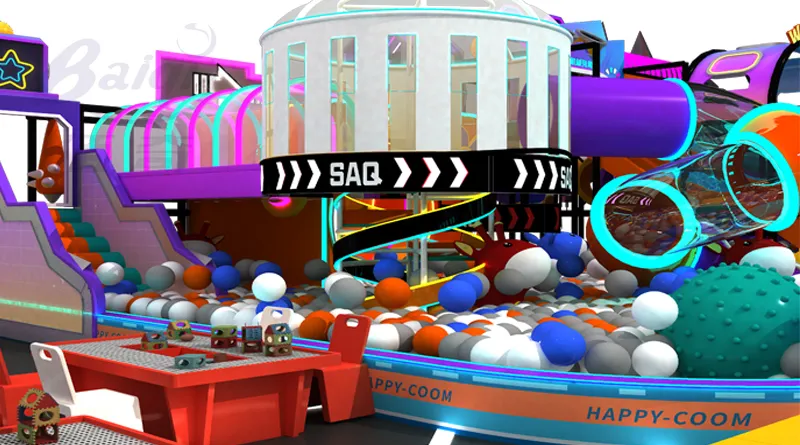
Kids jump, kick, and climb with forces that would destroy ordinary materials. Commercial-grade naughty castle equipment counters this with a multi‑layer material system. Galvanized steel pipes form the frame; high‑density EVA or EPE foam provides impact attenuation, with 20 mm thick foam layers wrapped around wood cores; PVC leather covers the foam, using 1000D high‑density fabric with 0.45–0.55 mm thickness—anti‑scratch, waterproof, flame‑retardant, and easy to clean. Sliding components are rotomolded from LLDPE (Linear Low‑Density Polyethylene). This material is UV‑resistant, non‑toxic, and highly impact‑absorbing, with wall thickness exceeding 6 mm and UV resistance up to Grade 8. High‑traffic ball pools use EVA or EPE foam balls with non‑toxic colors; slides may be LLDPE or fiberglass (FRP) for long, curved runs; rope courses use nylon ropes with steel cores, supporting climbers up to 500 kg total capacity. TUV‑certified steel, PVC, PE, and wood combinations meet global safety standards while keeping weight manageable.
[Image: close-up showing LLDPE slide surface, PVC-covered foam padding, and galvanized steel framework cross-section]
Safety standards protect operators from liability as much as they protect children. The two dominant frameworks are ASTM F1487 (North America) and EN1176 (Europe). ASTM F1487 covers entrapment hazards, use zones, and impact attenuation; EN1176 specifies general safety requirements for permanently installed public playground equipment and surfacing.
TUV certification adds third‑party verification of structural integrity and fire resistance. Pro‑model naughty castles with premium fire‑retardant PE reduce flammability by 50% compared to standard plastics. For operators, certified equipment simplifies insurance. When an accident occurs, the first document requested is the equipment‘s safety certification. EN1176, ASTM, and CE labels provide that paper trail.
Non‑certified equipment may look identical in photos, but the difference appears after the first incident. Insurance claims are denied, citations are issued, and the entire playground may need replacement. Certification costs 5–15% of the total equipment price; replacement costs 100%.
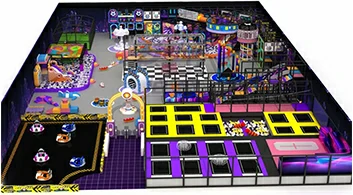
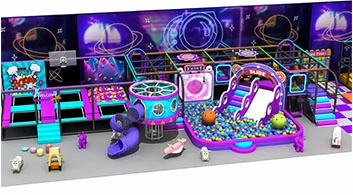
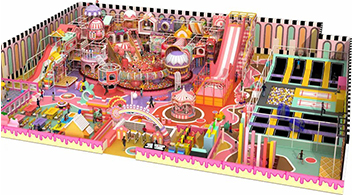
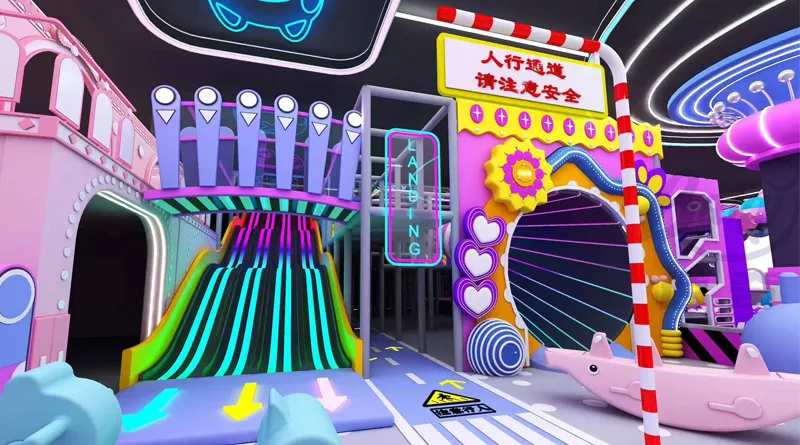
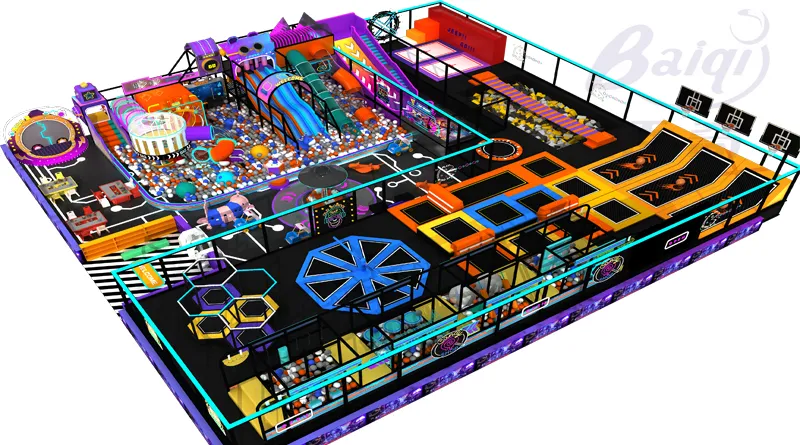
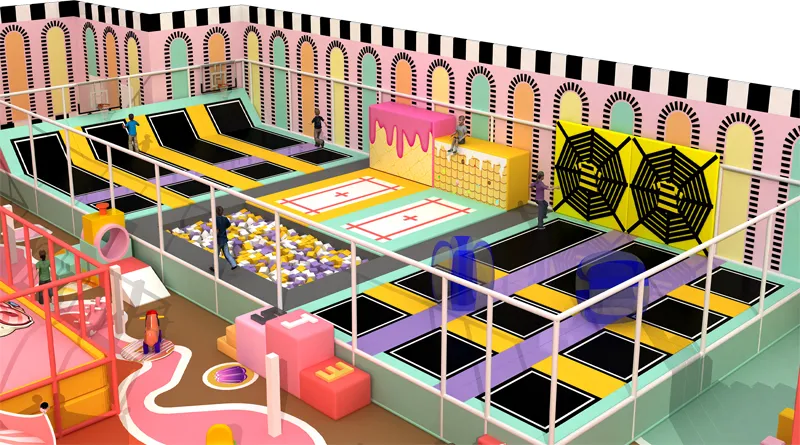
A naughty castle‘s layout directly affects how long children stay and how often they return. Multi‑level designs use 1–4 vertical tiers to increase capacity without expanding the building footprint. A 200 m² naughty castle with two levels effectively offers 300–350 m² of playable space. Including slides, ocean ball pools, ball spreaders, swings, and carousels creates a “complete playground” that feels different each visit. Themed layouts—city themes, ocean parks, pirate ships, or candy lands—boost memorability and encourage repeat visits. Interactive projection games integrated into ball pools or slides extend average stay by 40% compared to traditional equipment. A 450 m² castle accommodating 50–80 children simultaneously can generate 3000+ yuan daily revenue in peak season, with an investment recovery cycle of 12–15 months for well‑chosen equipment.
Q: How long will a commercial naughty castle really last?
A: With proper maintenance, galvanized steel frames last 15+ years; soft play components (PVC and foam) last 5–8 years; LLDPE slides can last 8–10 years with regular cleaning. Manufacturers offer warranties ranging from 1–2 years (standard) to 3–5 years (premium). Actual lifespan depends on daily usage hours and maintenance frequency.
Q: Can I fit a naughty castle into an oddly shaped space?
A: Yes. Modular design allows layouts tailored to specific building dimensions. Operators can specify color schemes, themed elements (candy, ocean, city, military), and safety features like enhanced shock‑absorbent flooring. The design process starts with site measurement, followed by 2D layout planning and 3D renderings before fabrication.
Q: How many kids can play without feeling crowded?
A: Capacity ranges from 20–200 children depending on footprint. A 20–50 m² castle handles 15–30 children; 50–100 m² handles 25–50 children; 100–200 m² handles 40–80 children; over 200 m² handles 80–200 children.
Q: What daily checks keep it running for years?
A: Daily checks include inspecting PVC for tears, checking netting tension, cleaning surfaces, and testing fasteners for tightness. Monthly inspections include verifying structural bolts, checking foam compression, and applying lubricants to moving parts. Annual professional inspections identify hidden issues like internal foam degradation or stress cracks in welds.
When play equipment must survive years of daily use without losing safety or appeal, the manufacturing process and material sourcing make the difference. Baiqi specializes in Naughty Castle Play Equipment Candy indoor playground equipment built for commercial environments. Their equipment uses galvanized steel frames with anti‑UV powder coating, LLDPE rotomolded slides exceeding 6 mm thickness, and multi‑layer PVC‑covered foam padding meeting ASTM fire resistance standards. Baiqi also offers professional installation services, comprehensive warranties, and design teams that tailor layouts, colors, and themes to match specific space constraints.
→ Request a quote from Baiqi for the Naughty Castle Play Equipment Candy indoor playground equipment — Share your available square footage, target age range (recommended 3–12 years), preferred theme, and budget. Their design team will provide 2D layout plans and 3D concept designs based on your venue‘s specific dimensions.


Copyright © 2024 Wenzhou Baiqi Playground Equipment Co., Ltd All rights reserved.
 Get a Custom Playground Quote