
Fast Flexible and Affordable
Discover Our Playground Equipment Solutions Today!

 May 09,2026
A shopping mall in Southeast Asia opened a soft play area on its second floor. The space was 200 ㎡, big enough for a small forest‑themed naughty castle. The developer projected 100 visitors per day. Actual traffic hit 200 within two months. Weekends doubled that. Every surface of the naughty castle play equipment had to withstand daily impact from toddlers throwing themselves down slides, school‑age children bouncing on rope nets, and parents leaning on platforms while waiting for their youngest to come out of the ball pit.
The equipment that lasted through that load was not off‑the‑shelf carnival gear. It was a forest‑themed indoor soft playground built to commercial durability standards: slides formed from UV Grade 8 LLDPE resin, platforms padded with EVA foam and wrapped in PVC leather, frames made from galvanized steel with hot‑dipped zinc coating, and every pinch point covered by a spring guard the size of a child‘s fist. This article explains the three material choices that determine whether a naughty castle survives a second year or needs refurbishment after six months, the safety certifications that protect both children and your liability insurance, and the design decisions that turn a basic soft play area into a destination that draws families from across the city.
Slides take more abuse than any other component in a naughty castle. A child climbs the ladder, slides down, gets up, climbs again. On a busy Saturday, a single slide may be used 1,000 times. Plastic that is not formulated for this duty will fade, craze, and eventually crack. Cracked plastic is a snag point. Snag points cause clothing tears and skin abrasions.
The 002 forest naughty castle play equipment uses LLDPE (linear low-density polyethylene) rotomolded parts for slides and tube elements. The material is sourced from imported SK resin, rotomolded to a wall thickness of 6 mm or more. The UV resistance rating is Grade 8, the highest level on the industry scale, which means the plastic will not become brittle after years of exposure to shopping mall roof lights or skylight windows that let unfiltered sunlight into the play area.
Unlike standard PE, LLDPE adds two key features for commercial soft play. The material has high strength and good weather resistance, maintaining impact strength across the full operating temperature range of an air‑conditioned mall. The rotomolding process also allows complex shapes – a twisty slide that weaves around a support column, a rounded tunnel that connects two platforms – without the sharp seams that injection‑molded parts leave behind.
The platforms where children crawl, stand, and jump are the second most abused surface. A soft play platform is typically a multi‑layer sandwich: a plywood or composite board core for structural rigidity, a layer of EVA foam for cushioning, and a PVC leather covering that provides a wipe‑clean, non‑abrasive surface.
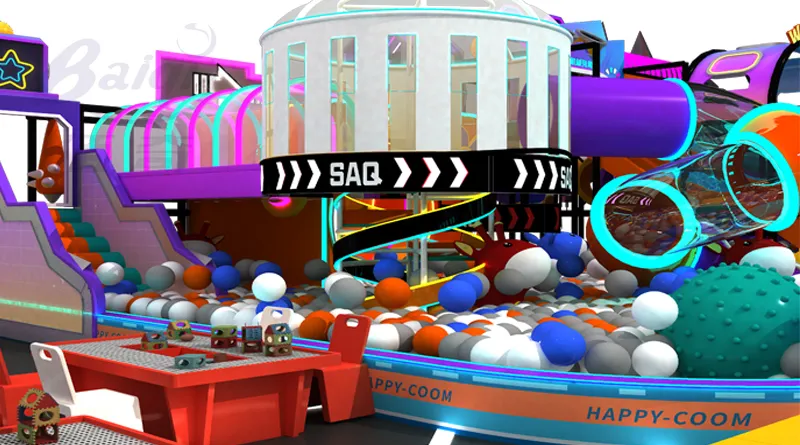
The 002 forest naughty castle uses high‑density EVA foam density sponge on every platform surface, covered with PVC leather that is water‑ and oil‑proof, easy to clean, and flame‑retardant. The EVA foam provides the impact absorption that prevents injuries when a child falls from a 1.5 m platform. The PVC covering has a thickness of 0.45 mm or more, which resists tearing when a shoe or toy catches the edge.
The metal frame beneath the platform uses galvanized steel pipes (outer diameter 48 mm, wall thickness 1.5 mm or more) that are hot‑dipped to prevent rust from condensation that forms under the foam padding. Unprotected steel in a humid play environment will develop surface rust within a year. The rust flakes, the foam shifts, and the platform becomes uneven – a trip hazard.
Trampolines in naughty castles have exposed steel springs that connect the jumping mat to the frame. On residential trampolines, these springs are left open. A child‘s foot can slip between the mat and the frame, or a finger can be pinched in the spring coil. In a commercial play environment with insurance coverage on the line, that level of exposed hardware is unacceptable.
The 002 forest naughty castle play equipment includes spring covers on every trampoline. The cover is typically a heavy‑gauge PVC sleeve that slides over the spring, eliminating the pinch point entirely. The trampoline mat itself is made of PP material (polypropylene) with a weight and weave density optimized for commercial use.
| Component | Material Specification | Durability Requirement |
|---|---|---|
| Slide surface | SK imported LLDPE, rotomolded, ≥6mm wall | UV Grade 8, impact‑resistant |
| Platform core | Plywood or steel frame + EVA foam, ≥8mm | Compression set resistance |
| Platform covering | PVC leather, ≥0.45mm thickness | Water‑ and oil‑proof, flame‑retardant |
| Frame pipe | Hot‑galvanized steel, Φ48mm, ≥1.5mm wall | Rust‑proof, structural rigidity |
| Trampoline springs | Zinc‑plated or spandex‑coated steel | Spring cover mandatory |
| Floor mat | EVA foam density sponge, ≥6mm thick | Shock‑absorbing, non‑slip |
The Baiqi equipment is tested to comply with EN1176 (the European playground safety standard), ASTM F1918 (the American standard specifically for soft contained play equipment), and SGS third‑party verification. Each certification covers a different aspect of the soft play structure.
ASTM F1918 is the US standard specifically written for indoor soft play systems like naughty castles. It covers structural integrity, entrapment hazards, fall zone surfacing, and the spacing between platform guardrails. For a forest‑themed naughty castle, ASTM compliance requires that the spacing between uprights and between platforms does not create openings where a child‘s head could become trapped. The standard also specifies the height of guardrails on elevated platforms and the thickness of impact‑absorbing surfacing in fall zones.
EN1176 is the European standard for playground equipment and surfacing. It includes more detailed requirements for rope elements, climbing nets, and moving parts than the ASTM standards. For the forest 002 castle with its rope bridges and hanging rings, EN1176 requires that all rope terminations be heat‑sealed or capped to prevent fraying, and that the netting mesh be sized so that a child‘s head cannot pass through while the body follows.
SGS testing provides third‑party validation of material safety. For the 002 forest castle, SGS reports cover the flame retardancy of foam blocks (ASTM standards for fire resistance) and the chemical safety of any paints or coatings used on the plastic parts. A shopping mall or commercial landlord will ask for these test certificates before allowing a soft play operator to open. Without them, the space stays empty.
A naughty castle that serves both toddlers and school‑age children creates a design conflict. A rope bridge that is thrilling for an 8‑year‑old may be too high for a 3‑year‑old. A tunnel that is safe for a 3‑year‑old is boring for an 8‑year‑old.
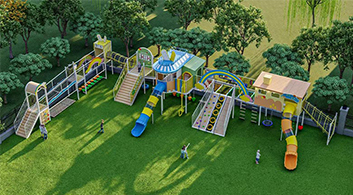
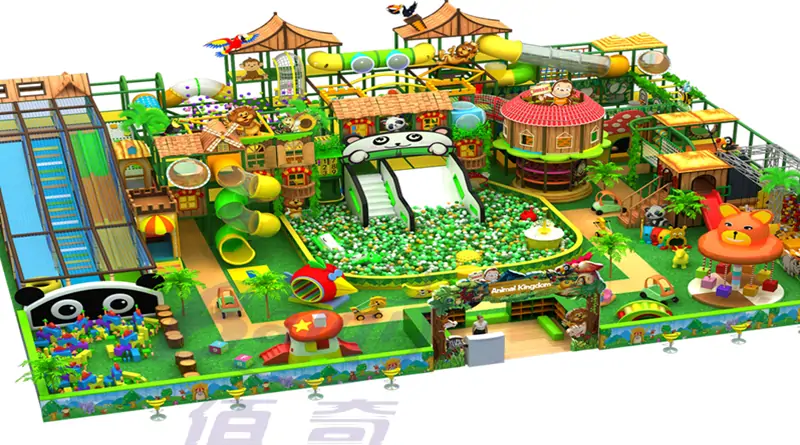
The 002 forest castle solves this by layering zones. The soft play area on the ground level uses foam shapes, low‑height slides, and ball pits, designed for ages 2‑5. The upper level connected by rope nets and climbing frames is designed for ages 5‑12, with higher platforms, more challenging obstacles, and a greater degree of physical exertion. The two levels are visually connected – parents can watch older children from the ground while toddlers play at their feet.
The rope elements use flexible fabric with tough knitted rope covering. All rope ends are heat‑sealed to prevent fraying. The climbing frames are finished with corrosion‑resistant coating that does not chip or peel when hit by shoes.
A naughty castle in a humid mall will have condensation forming on steel surfaces every night when the air conditioning turns off and warm, moist air meets cold metal. Uncoated steel rusts. Rust flakes fall onto the soft play mats, and children pick them up. The 002 forest castle uses hot‑galvanized pipes that are zinc‑coated before fabrication. The zinc layer provides sacrificial protection; even if the pipe is scratched, the surrounding zinc corrodes first, leaving the steel intact.
The PVC leather covering the EVA foam is stitched or heat‑welded at the edges. On low‑quality equipment, the stitching comes apart after a year of children pulling on the edges. The 002 forest castle uses welded seams for all padded panels. The PVC is folded over the foam and heat‑sealed, creating a bond that is stronger than the material itself.
Bolts and screws that hold the structure together will loosen over time from vibration. Children jumping on platforms creates a low‑frequency vibration that works fasteners loose. The 002 forest castle uses lock washers and thread‑locking compound on every critical fastener. The maintenance schedule includes a monthly inspection where a technician checks the torque on a sample set of bolts.
Baiqi Playground manufactures the 002 forest naughty castle as a themed indoor soft play system for shopping malls, family entertainment centers, and stand‑alone play cafes. The structure is available in sizes ranging from 100 ㎡ up to 500 ㎡, with customization options for the slide configurations, rope elements, and colour schemes.
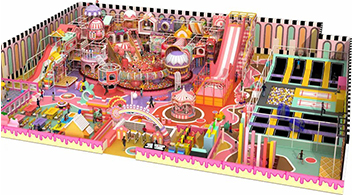
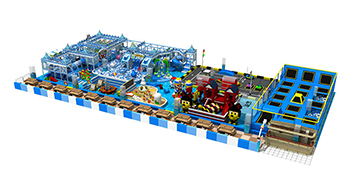
The 002 forest model is part of Baiqi‘s “naughty castle” series, which includes jungle, ocean, space, and candy themes. All equipment in the series shares the same material specifications: LLDPE slides (UV Grade 8), EVA foam platforms with PVC wrapping, galvanized steel frames, and spring covers on trampolines. The equipment is tested to EN1176, ASTM F1918, and SGS standards, with test certificates available for landlord approvals.
For a naughty castle play equipment system that handles 200 children a day without incident, the 002 forest model delivers the material durability, safety certification stack, and age‑zoned design that mall operators require to open a soft play area.
[Request a quote from Baiqi Playground]
Contact Baiqi with your available floor space in square meters and target age range (2‑5, 5‑12, or mixed) to receive a forest naughty castle layout and equipment list.


Copyright © 2024 Wenzhou Baiqi Playground Equipment Co., Ltd All rights reserved.
 Get a Custom Playground Quote