
Fast Flexible and Affordable
Discover Our Playground Equipment Solutions Today!

 Jul 27,2026
You're evaluating a large-scale commercial opportunity—a trampoline park for a shopping mall, an entertainment center, or a standalone venue. The space is substantial: over 500 square meters. The investment is significant. And the potential return depends on one thing: getting the equipment and layout right.
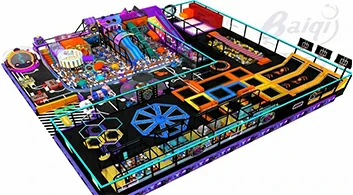
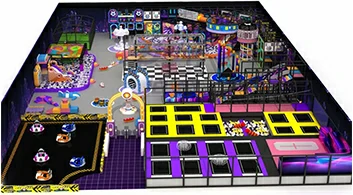
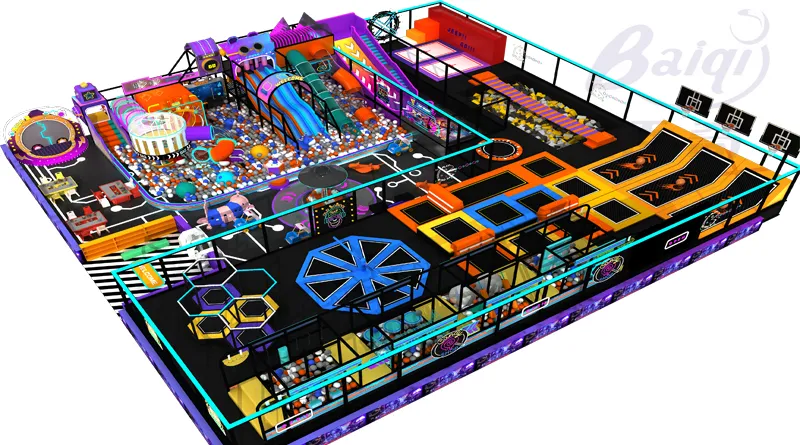
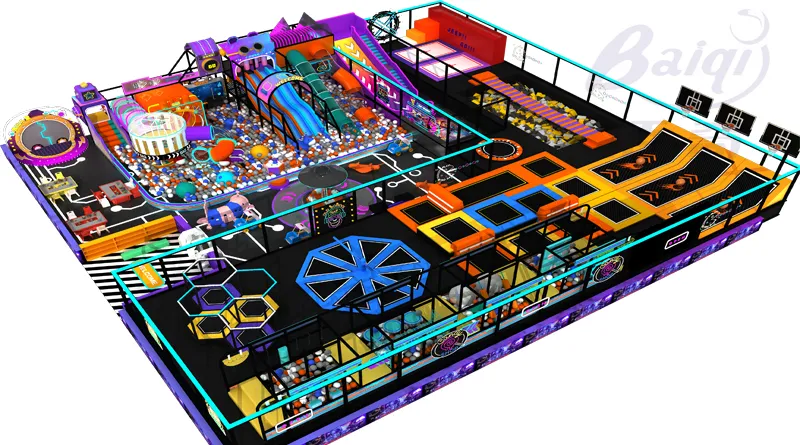
A Trampoline park at this scale is more than a collection of jumping mats. It's a high-capacity entertainment ecosystem with multiple attractions—open jump zones, dodgeball courts, foam pits, ninja courses, and climbing walls—all working together to maximize throughput, dwell time, and revenue per square meter. This guide covers what makes a large trampoline park work commercially: the equipment mix, safety standards, layout optimization, and the customization options that create a unique identity. For commercial operators and investors, this is a practical framework for building a high-performing indoor attraction.
For venues over 500㎡, the economics shift. More space means more attractions, more capacity, and more revenue streams.
A larger trampoline park accommodates more visitors simultaneously. With multiple zones—open jump, dodgeball, foam pit, ninja course—the park can handle peak demand without overcrowding. Higher throughput means lower cost per visitor and faster ROI.
A multi-attraction layout generates income from multiple sources: admission fees for open jump, court rentals for dodgeball and basketball, party bookings for birthdays and corporate events, fitness classes during off-peak hours, and add-ons like LED lighting, interactive projection games, and party room furniture. Each attraction adds a revenue layer, making the business model more resilient.
A large park with diverse attractions stands out in a crowded market. Competitors with single-zone layouts can't match the experience. Themed zones—space, jungle, neon—create a unique identity that drives social media sharing and repeat visitation.
The right equipment mix determines guest satisfaction, safety, and operational efficiency.
The foundation of any trampoline park is the trampoline system itself. For commercial use, the equipment must withstand daily heavy use. Key specifications include: Q235B galvanized steel frame, 48mm diameter, 2.0mm thickness for structural integrity; zinc-plated steel springs, 8cm length, 5mm wire diameter, tested to 100,000 cycles for durability; PP webbing jumping mat, 80mm width, UV-resistant, tear strength exceeding 2000N; 50mm EPE foam + 0.9mm flame-retardant PVC safety padding, EN71-3 certified for fire safety. These materials are built for the demands of commercial operation.
A large park needs variety. The product line includes indoor arenas (recommended area 100-500㎡), dodgeball courts (30-80㎡ per court), and outdoor series (15-50㎡). Each zone has specific frame material and padding requirements, with galvanized steel 2.0mm for indoor and hot-dip galvanized + anti-UV coating for outdoor. The combination of zones creates a full-day experience that keeps visitors engaged.
Safety enclosures are essential. Indoor arenas feature 1.8m height safety nets; dodgeball courts include dividing nets; outdoor series offer optional safety netting. The PE knotted net has 45mm mesh and tensile strength exceeding 800N, with anti-aging treatment for long-term durability.
Safety certifications are not optional for commercial trampoline parks. They protect guests, reduce liability, and satisfy insurance requirements.
The equipment is designed to meet multiple international safety standards: ASTM F1918 (US), EN1176 (Europe), CSAZ614 (Canada), AS3533 (Australia), and ISO 9001 for quality management. Certificates are provided with every shipment, giving operators the documentation needed for insurance and regulatory compliance.
Quality assurance begins with materials. In-house testing covers foam density, flame retardancy, and corrosion resistance. Materials are EN71-3 compliant, ensuring safety for children's play environments.
The equipment is designed for daily commercial use and passes inspection by major insurers. Documentation includes ASTM/EN1176 certificates, material test reports, and liability documentation accepted by insurers.
A generic trampoline park is forgettable. A customized park becomes a destination.
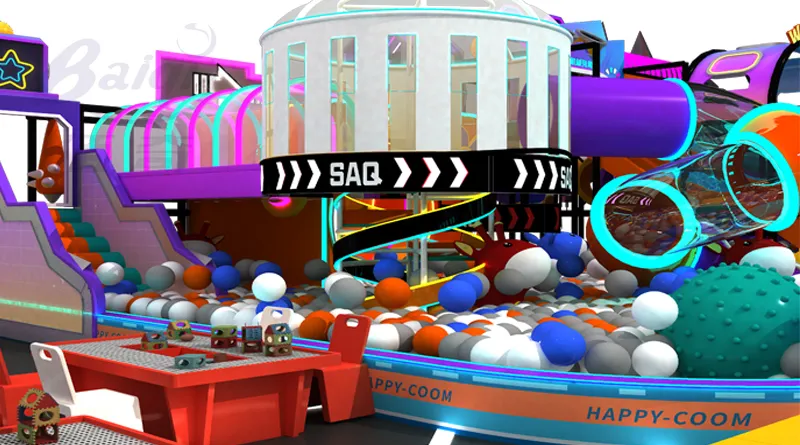
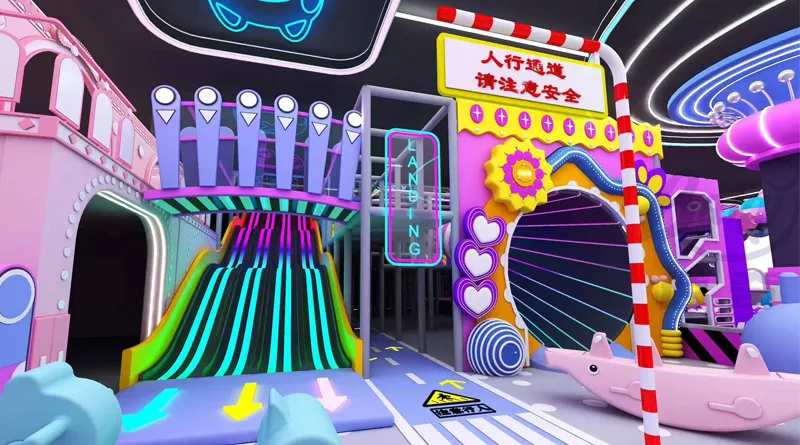
Theming transforms a collection of trampolines into an immersive experience. Options include space, jungle, and neon themes, with custom graphics, LED lighting, and interactive projection games. A space-themed park with neon strips and cosmic designs creates a visual identity that competitors can't replicate.
Custom colors, logo imprinting on pads and walls, and branded graphics align the park with the operator's brand identity. This is particularly valuable for malls and entertainment centers where brand consistency matters.
Trampolines can be combined with soft play areas or ninja courses to create a multi-zone experience. This integration maximizes the value of the space and appeals to different age groups—from toddlers to teens to adults
Understanding the investment and return profile is essential for decision-making.
For large custom projects, the cost typically ranges from $150 to $400 per square meter, depending on complexity, theme, and shipping. The investment covers trampolines, pads, springs, nets, and installation drawings.
Projects fall into three categories: starter soft play (30-80sqm, lower cost, fast delivery); commercial mall playground (100-300sqm, balanced ROI); and FEC anchor attraction (300-1,500+sqm, custom quote based on capacity and attraction mix). For venues over 500㎡, the anchor attraction model applies.
Proven designs maximize foot traffic, dwell time, and ticket sales. Data-driven layouts optimize play value per square meter. Free revenue projection and ticket pricing strategy are available based on local market conditions.
| Factor | Consideration | Impact on ROI |
|---|---|---|
| Attraction Mix | Multiple zones vs. single type | Higher per-visit spend and dwell time |
| Safety Certification | Certified vs. uncertified | Lower liability, faster insurance approval |
| Customization | Themed vs. generic | Stronger brand identity, higher repeat visitation |
| Installation Support | Remote guidance vs. onsite | Faster opening, lower startup costs |
| Warranty | 5-year steel frame, 2-year soft parts | Lower long-term maintenance costs |
What is the minimum space for a multi-attraction trampoline park?
For a commercial trampoline park with multiple attractions, the recommended area is 100-500㎡ for indoor arenas, with dodgeball courts requiring 30-80㎡ each. For venues over 500㎡, the large multi-attraction configuration is specifically designed to maximize the value of substantial floor space.
What certifications are required for insurance and liability coverage?
The equipment meets ASTM/EN1176 standards with certificates provided for every shipment. Additional standards include CSAZ614 (Canada), AS3533 (Australia), and ISO 9001. Material test reports and liability documentation are accepted by major insurers.
Can trampolines be combined with other attractions?
Yes. Multi-zone parks can integrate trampolines with soft play, ninja courses, climbing walls, and party rooms. This creates a full-day experience that appeals to different age groups and maximizes revenue per square meter.
What is the typical cost per square meter for a large trampoline park?
For large custom projects, the cost typically ranges from $150 to $400 per square meter, depending on the complexity of the attractions, the theme, and shipping requirements. The cost includes trampolines, pads, springs, nets, and installation drawings.
A large trampoline park is a significant commercial investment—and a proven one. With the right equipment mix, rigorous safety standards, thoughtful layout, and strong customization, a venue over 500㎡ can become a destination that attracts families, teens, and fitness enthusiasts alike. The market is growing. The demand is proven. And with the right partner, the returns follow.
Baiqi Playground is an experienced indoor trampoline park equipment manufacturer with 500+ successful projects exported to 50+ countries. The company provides turnkey solutions from design to installation, including free 3D design within 5 days, factory-direct pricing (saving 30% vs Western brands), and global installation support with remote guidance or onsite engineers. All equipment meets ASTM/EN1176 standards with certificates provided, and the 5-year steel frame warranty (2 years for soft parts, lifetime spare parts) protects your investment.
Contact Baiqi Playground's team to discuss your space, budget, and target audience—they can provide custom 3D renderings, detailed quotes, and revenue projections for your trampoline park project.


Copyright © 2024 Wenzhou Baiqi Playground Equipment Co., Ltd All rights reserved.
 Get a Custom Playground Quote